Reunification Express Train 2026: Route, Timetable & Costs
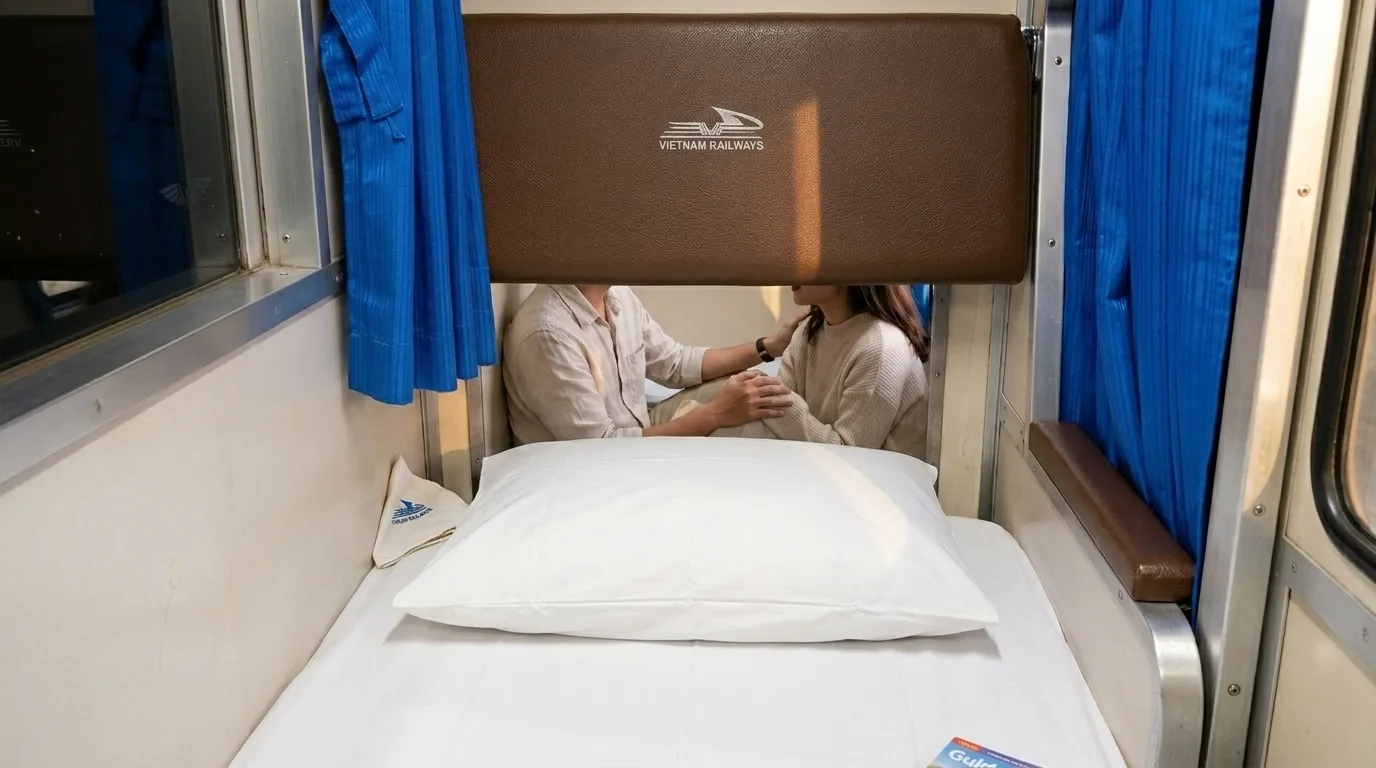
Cover image: AI-generated editorial illustration, not a photograph of this route or the carriage you will book.
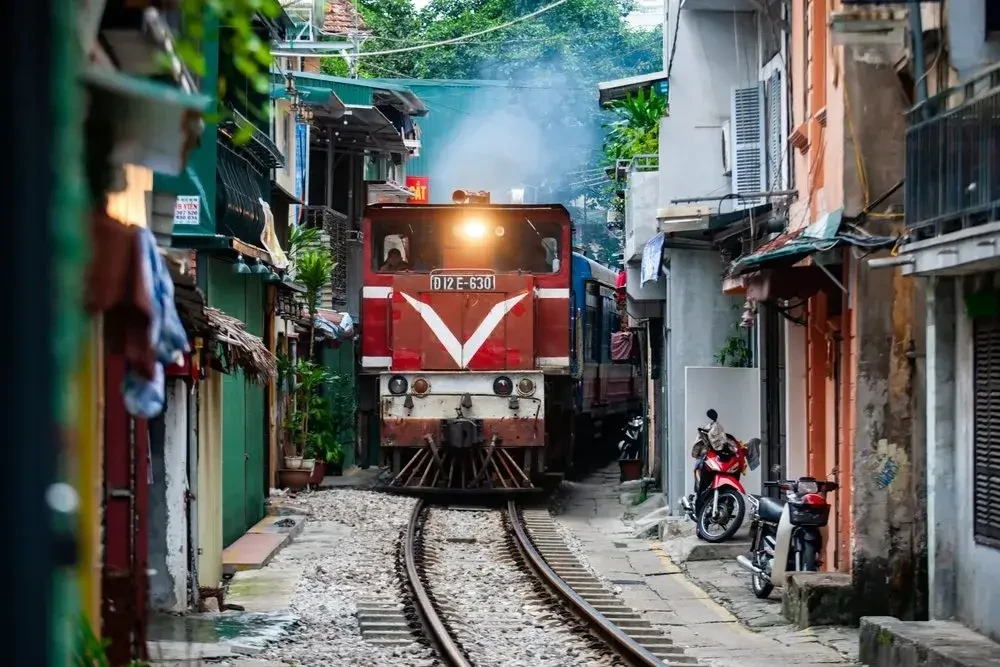
Quick answer: “Reunification Express” is the popular name for passenger services on Vietnam’s North–South railway between Hanoi and Saigon. An end-to-end trip usually takes well over a day, while the exact timetable, train number, fare and available cabin classes depend on your date. Compare live services before choosing a through journey or shorter overnight segments.
Vietnam’s North–South railway links Hanoi and Saigon through central coastal cities. This guide explains how to choose a train, compare sleeper classes and plan scenic stops. The journey is conventional long-distance rail, so leave room in your itinerary for delays and changes.
What to Know About the Reunification Express 2026
Before you start building your itinerary, here are the baseline facts about traveling the North-South railway line on the Reunification Express 2026 route operated by Vietnam Railways (VNR):
- Route length: 1,726 km (1,072 miles) between Ga Hanoi in the north and Ga Saigon in the south.
- Total travel time: Allow well over a day for the full Hanoi–Saigon journey. Use the departure and arrival dates in your selected service to calculate the actual duration.
- Fare: Dynamic by train, travel date, class and berth position; review the current total before payment.
- Booking window: Inventory release dates can vary, especially around holidays. Search your intended date and do not assume a fixed sales window.
- Luggage: Personal luggage normally travels with you, but storage space and operator rules vary by service. Check the conditions attached to your ticket.
Reunification Express Route Map and Major Stops
The route follows Vietnam’s main coastal rail corridor. Use this practical route map to decide whether to travel end to end or split the journey into shorter sectors.
| Section | Major stops | Why travelers choose it | Route planning |
|---|---|---|---|
| North | Hanoi, Ninh Binh, Dong Hoi | Overnight access toward central Vietnam | Check the train number and arrival time |
| Central | Hue, Hai Van Pass, Da Nang | The best-known scenic rail section | Compare Da Nang–Hue trains |
| South-central | Quy Nhon area, Nha Trang, Phan Thiet area | Coastal stops and overnight segments | Confirm the exact station used by your train |
| South | Saigon | Southern terminus in Ho Chi Minh City | Compare Hanoi–Saigon trains |
Timetable note: Train numbers and times can change. Always use the live result for your exact date rather than an undated timetable copied from another source.
Which Reunification Express Train Should You Take?
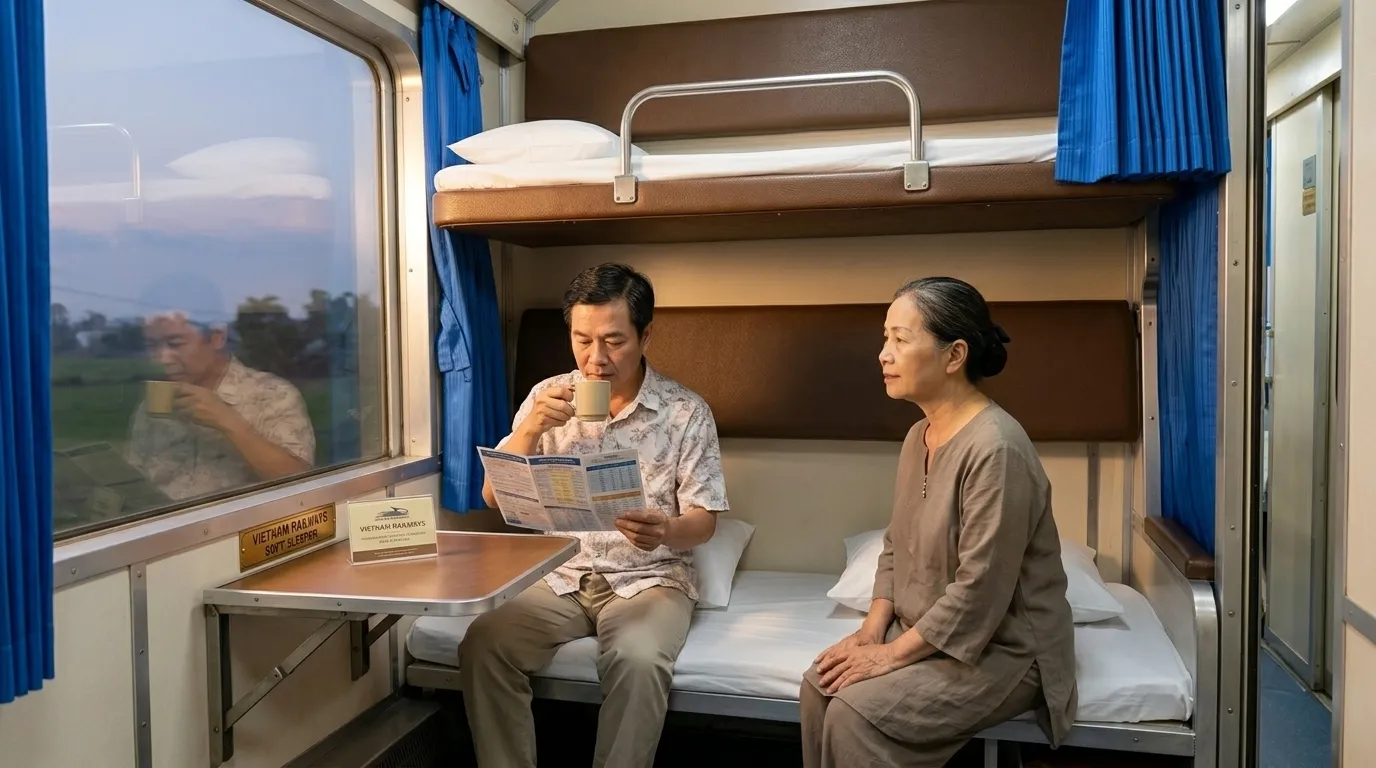
The state operator, Vietnam Railways, runs several daily services along the main line. They are designated by the letters "SE" followed by a number. Odd numbers (SE1, SE3, SE5) travel south from Hanoi to Ho Chi Minh City. Even numbers (SE2, SE4, SE6) travel north from Ho Chi Minh City to Hanoi.
Comparing SE1/SE2, SE3/SE4 and Other Services
Compare the single-digit SE services first when journey time matters, but do not assume one train is always the “best.” Rolling stock, facilities and the time at which a train reaches the Hai Van Pass can vary. Choose using the live timetable, available class, arrival time and total fare for your date.
Compare each service against your arrival plans. For the full corridor, read our Hanoi to Ho Chi Minh City train guide.
Other Services and Intermediate Stops
Train numbers are service identifiers, not a reliable ranking of carriage age, cleanliness or comfort. Compare the stops, journey time and class shown for each departure; a higher train number does not by itself mean an inferior train.
Search Hanoi to Saigon trains for the travel date and class you need. A specific seat or berth remains subject to confirmation and ticket issuance.
How Much Does the Reunification Express 2026 Cost?
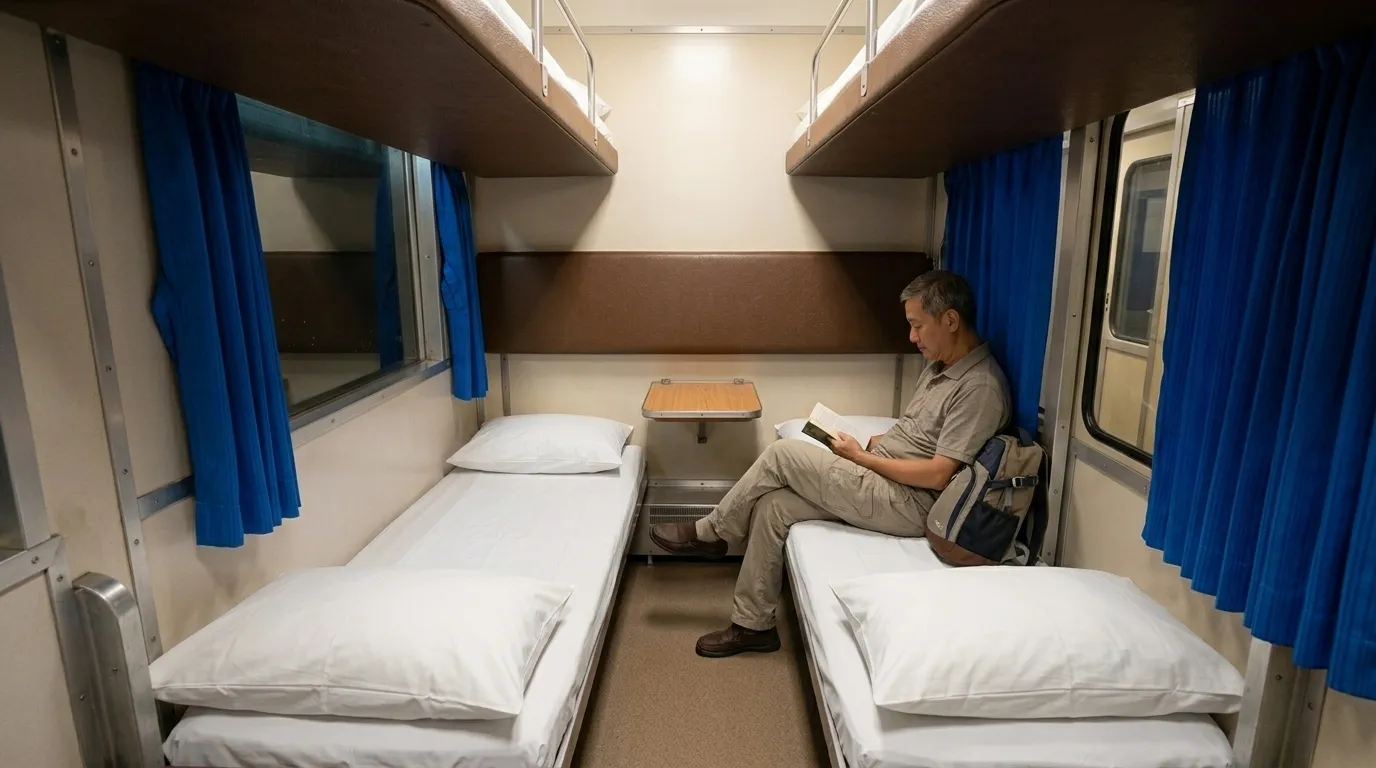
Train fares in Vietnam are dynamic. They fluctuate based on the season, the specific train service, and how far in advance you book. However, the biggest price difference comes down to the class of ticket you choose for your journey.
Soft Sleepers (4-Berth Cabins)
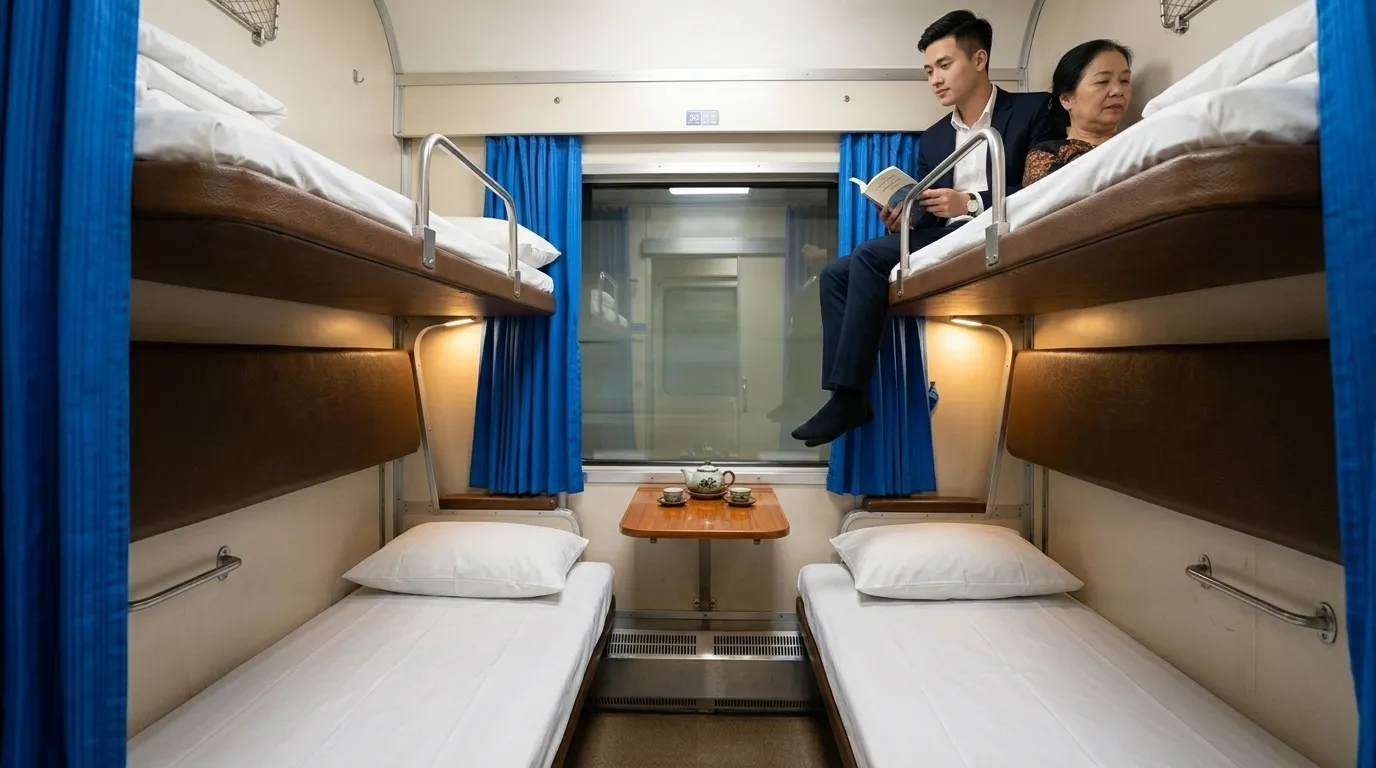
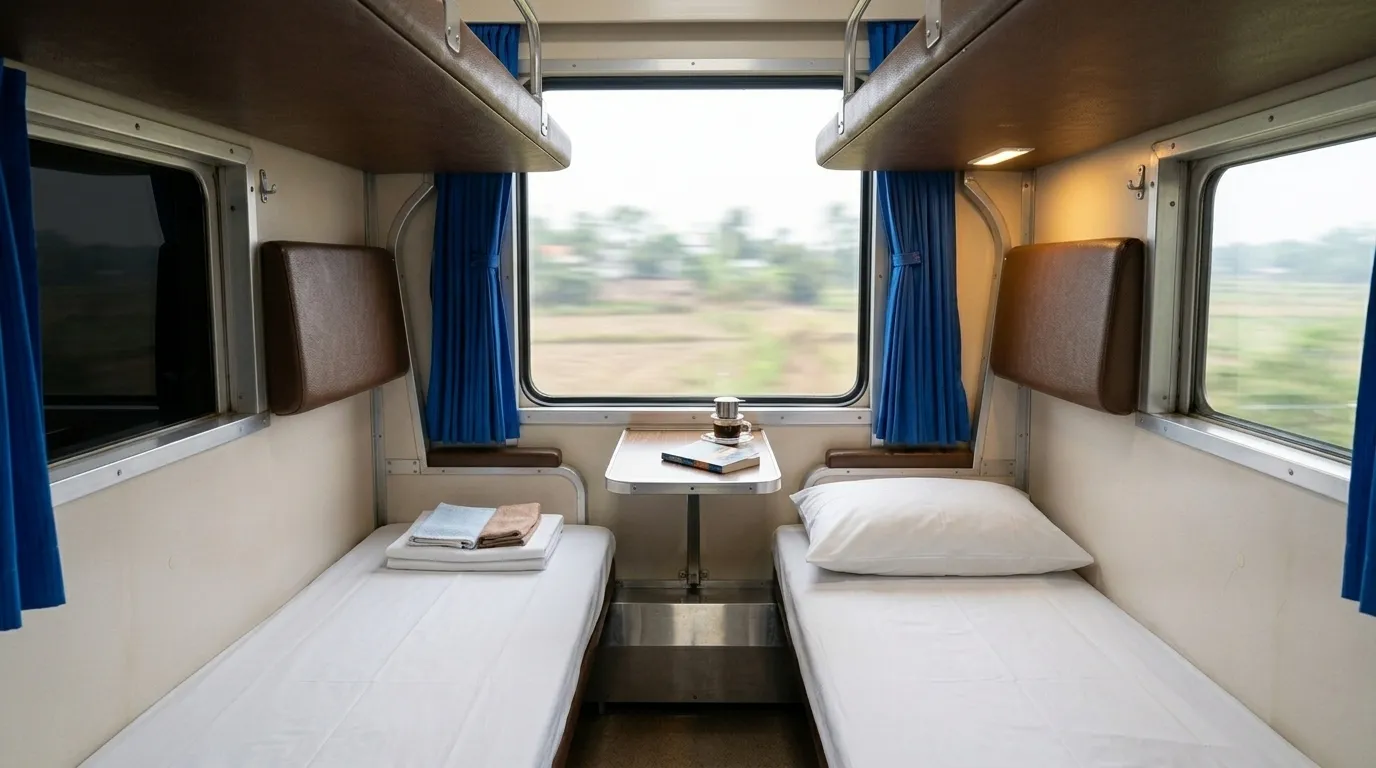
A standard soft sleeper normally has four berths, with two upper and two lower beds. It provides more space per passenger than a six-berth cabin. Bedding, reading lights and charging facilities differ between carriages, so check the selected service description.
Compare berth position and whether the fare buys one berth or a whole cabin. Our soft sleeper guide explains the shared-cabin layout.
Hard Sleepers (6-Berth Cabins)
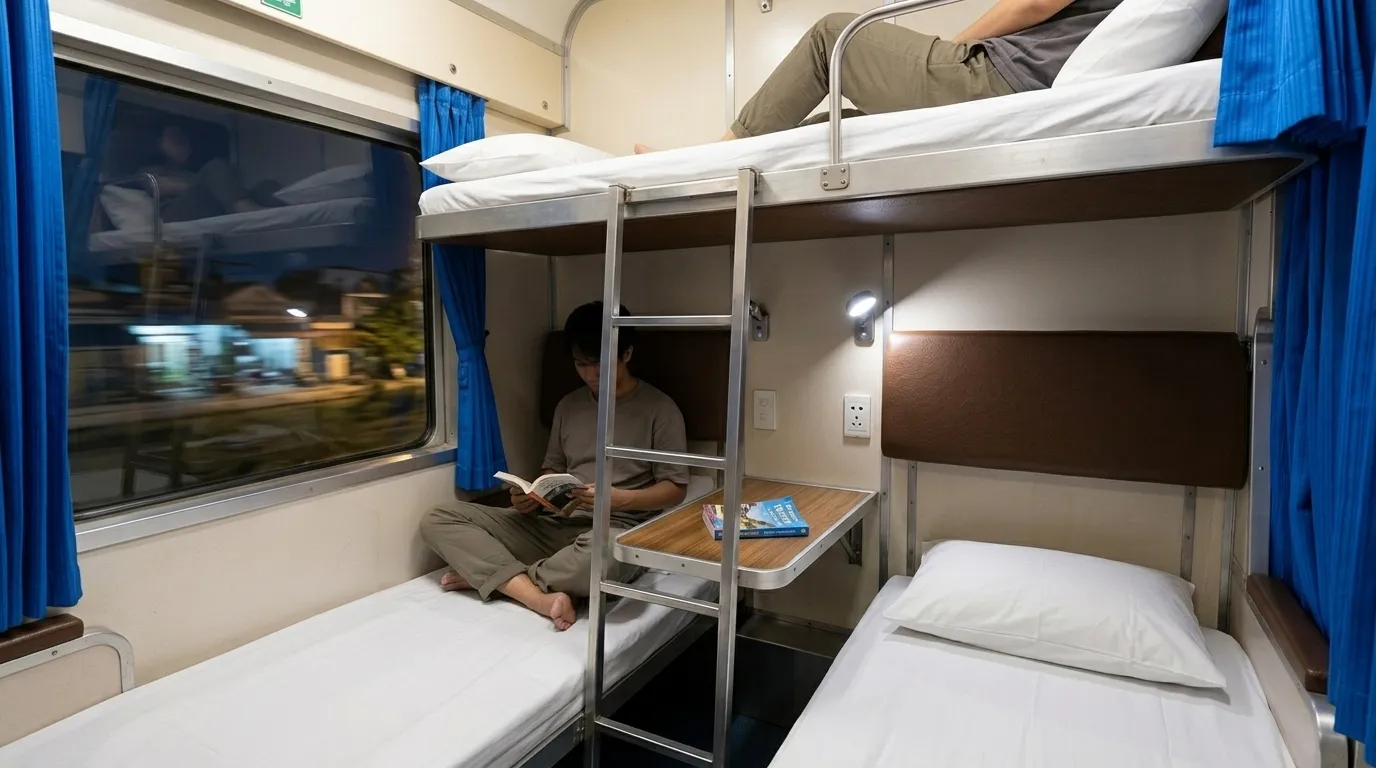
A hard sleeper usually has six berths in three levels on each side. Vertical space is more limited, especially in upper berths. Compare the berth position and access requirements before choosing; see the six-berth sleeper guide.
Seats: Soft vs. Hard
Soft seats are padded seats suited to many daytime journeys. Recline and legroom vary by carriage. See our soft seat guide for practical comparisons.
Hard seats are basic seating where offered. Consider the actual journey duration and your comfort needs before selecting them for a long trip.
If a lower berth matters, check whether it can be selected or only requested. Compare available classes and verify the assigned berth on the issued ticket.
| Ticket class | Relative price | Comfort | Best for |
|---|---|---|---|
| Soft sleeper | Usually highest standard-class fare | Four berths, more headroom | Long overnight journeys |
| Hard sleeper | Usually below soft sleeper | Six berths, less headroom | Budget overnight travel |
| Soft seat | Varies by train and segment | Padded reclining seat | Shorter daytime sections |
| Hard seat | Usually lowest where offered | Basic seating | Short trips and strict budgets |
Fares are dynamic. Check the live result for your origin, destination, date, train, class and berth position before payment.
What Are the Best Sections of the Reunification Express 2026?
The full route can be tiring in one sitting. Splitting it into shorter sectors lets you spend time in cities along the way. Book each sector separately and leave a generous buffer before any flight or other fixed connection.
The Hai Van Pass (Hue to Da Nang)
The Hue–Da Nang section crosses the Hai Van Pass and is a good option for a shorter scenic journey. Choose a service that traverses this section during daylight, allowing for seasonal daylight hours and possible delays.
The tracks wind around the mountainside, offering sweeping views of Lang Co Bay and deserted white-sand beaches. You want to sit on the left side of the train when heading south. If you are planning this specific leg, our Da Nang to Hue Train: Best Seats for Hai Van Pass (2026) article explains exactly which side of the carriage to book.
Hanoi to Da Nang (The Classic Overnight)
For Hanoi–Da Nang, compare overnight departures and the time they pass Hue. An evening departure does not automatically guarantee sunrise at the Hai Van Pass. See the Hanoi to Da Nang train guide for planning advice.
Luxury Alternatives
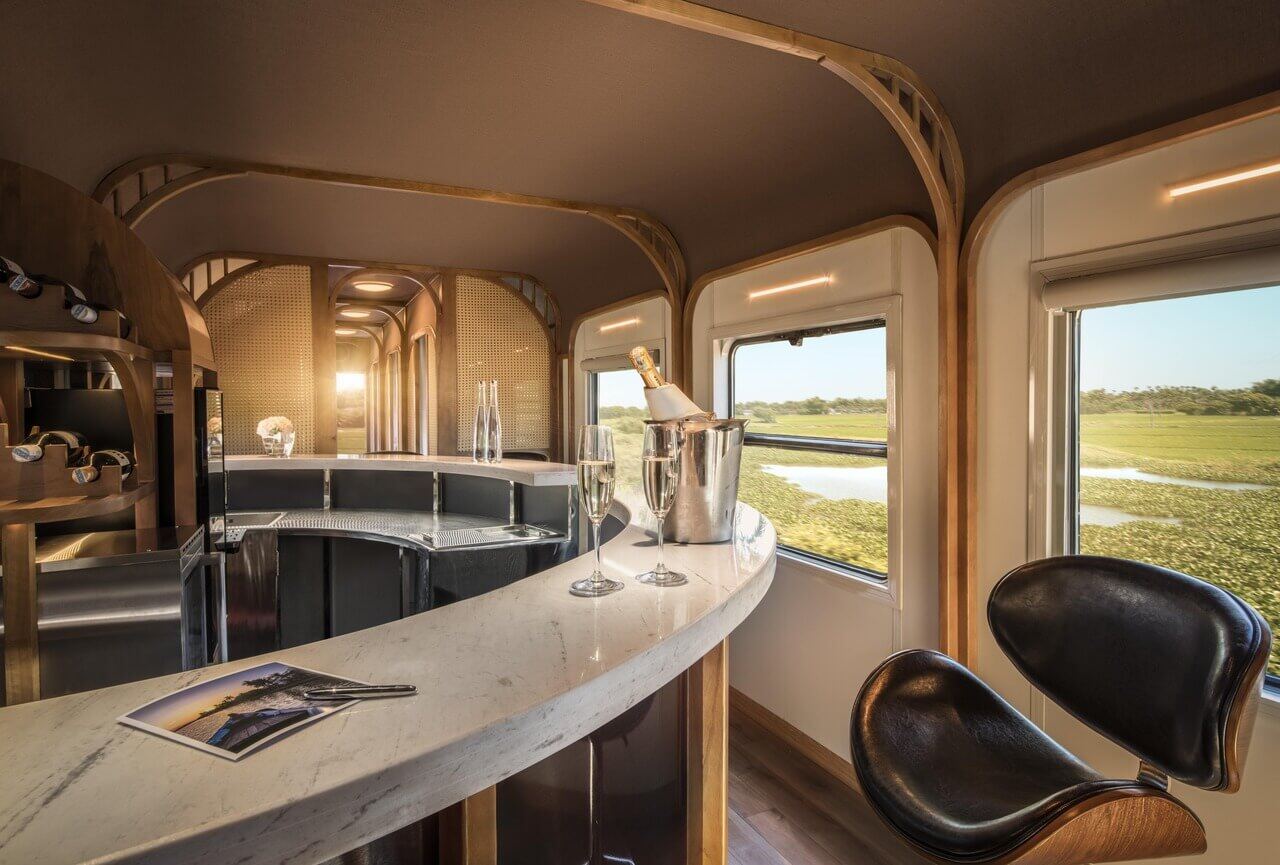
Private tourist carriages operate on selected services. Compare the named operator, exact cabin category, inclusions and cancellation terms shown for your date; amenities are not uniform across brands.
The Vietage by Anantara offers a separate luxury carriage experience between Da Nang, the Quy Nhon area and Nha Trang. Its dining and seating product differs from a standard overnight sleeper. Read the Vietage routes and inclusions guide.
For scenic trips, prioritize a daylight service and an available window seat. Check the seat assignment and direction of travel rather than relying only on a seat-map diagram.
Onboard Facilities & Dining
Knowing what to expect once you board the Reunification Express 2026 will make your journey much smoother. The facilities vary slightly depending on whether you are on a newer SE train or an older model, but the basics remain the same.
Food and drink: Meal, trolley and dining-car services vary by train and carriage. Check what is included in your fare. Bring drinking water and suitable snacks where the operator permits them, especially if you have dietary requirements. Stay aboard during short station stops unless staff expressly advise otherwise.
Bathrooms: Standard sleeper toilets are shared, usually at the carriage ends. Toilet type and condition vary. Carry tissues and hand sanitizer, and ask the attendant where facilities are located.
Connectivity and power: Wi-Fi, mobile reception and charging points vary by service and location. Charge devices before boarding and download tickets, maps and entertainment for offline use.
Expert Tips for Riding the Vietnam Railway
These practical preparations help with a long journey:
- Consider a lower berth: It can be easier to access if climbing is difficult. Availability and price differences depend on the train and date.
- Pack tissues and hand sanitizer: Carry a small personal supply for shared facilities.
- Bring a light layer: Air-conditioned carriages can feel cool, and temperature control varies.
- Book with time to review: Check your route, travel date, passenger details, fare conditions and ticket-delivery instructions. Read our Vietnam train ticket booking guide.
- Keep belongings secure: Keep valuables within reach and use the cabin lock as instructed by staff without obstructing emergency access.
- Keep your ticket handy. Keep your issued ticket and passport ready, and follow the station-entry and boarding instructions shown on your e-ticket.
Sources and Information Updates
Information checked on 11 October 2026. Timetables, fares, carriage facilities and ticket conditions can change; confirm the details for your journey before payment.
Frequently Asked Questions
How much does the Reunification Express cost?
Fares depend on the route, travel date, train, seat or sleeper class and berth position. Compare the total shown for your selected journey before payment.
Is the Reunification Express one train?
It is a common name for passenger services on Vietnam’s North–South railway between Hanoi and Saigon, rather than a single sightseeing train.
How long is Hanoi to Ho Chi Minh City by train?
Allow well over a day for the full journey. Check both the arrival date and time for your chosen train, and allow a buffer for delays.
Which train is best for the Hai Van Pass?
Choose a service that passes the Hue–Da Nang section during daylight. Train number alone does not guarantee the view, daylight timing or carriage facilities.
How far in advance can I book?
Sales windows vary by train, operator and holiday period. Search the intended date and check again if inventory has not yet been released; no universal 60-day or 90-day window applies.
Can I bring luggage?
Personal luggage is subject to the operator’s weight, size and storage conditions. Check the conditions attached to your ticket and contact the seller before booking oversized items.
Can I cancel or change a ticket?
Rules depend on the operator, ticket type and timing. Review the cancellation and amendment terms before payment, especially for private tourist carriages and holiday travel.