Vietnam Train Hard Sleeper: 6-Berth Layout & Booking
Quick answer: The Vietnam train 6-berth sleeper is an option for budget-conscious overnight journeys when you are comfortable with shared space. Compare the class shown for your train and date; published photos, prices and facilities are not guarantees of the carriage you will receive.
Layout and comfort
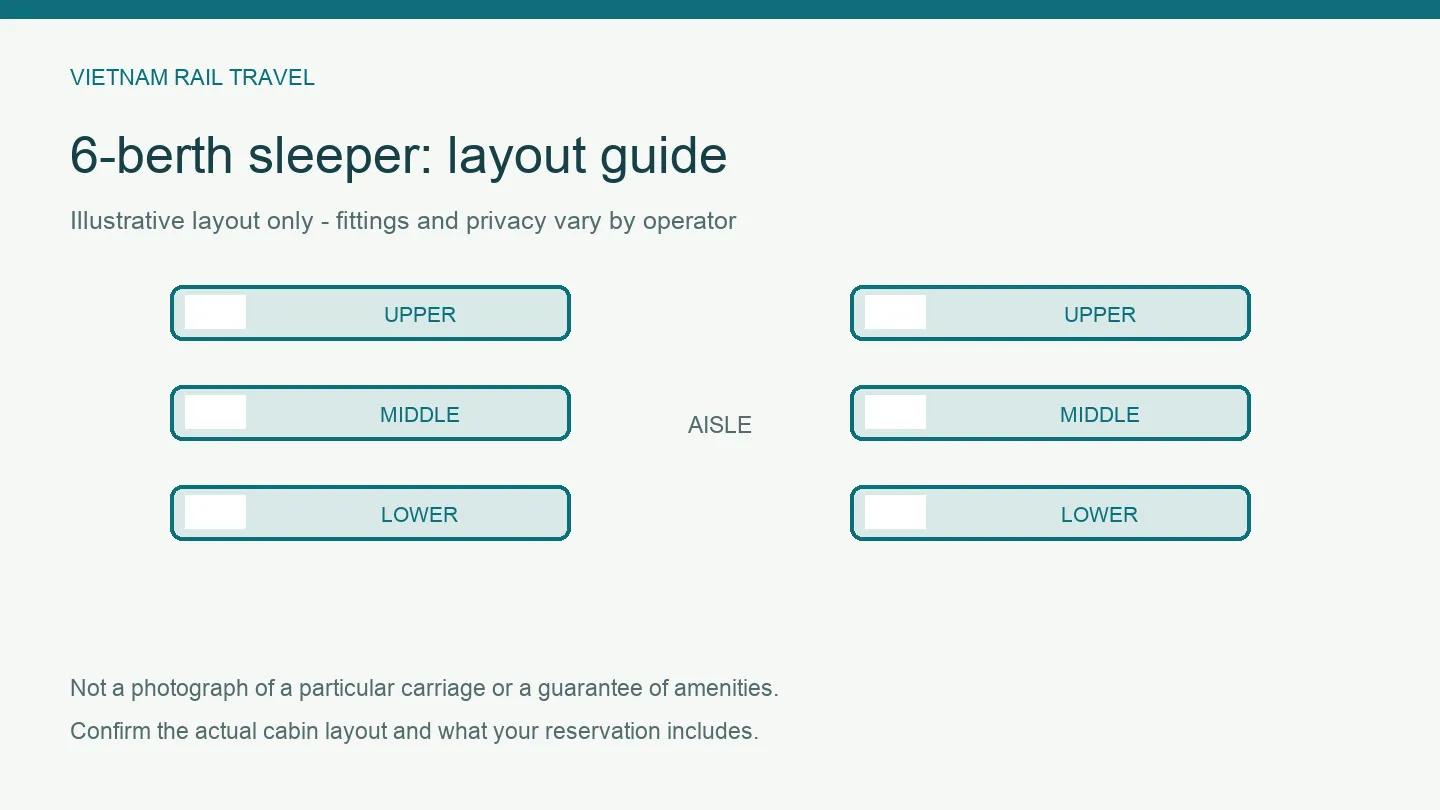
A six-berth sleeper compartment has three levels on each side: lower, middle and upper. It is a compartment, not a six-bed open-plan carriage. Middle and upper levels have less headroom, and access involves climbing.
| Class | Layout | Suitable use |
|---|---|---|
| Soft seat | Padded seat in a shared seating carriage | Daytime travel when sitting suits you |
| 4-berth soft sleeper | Two lower and two upper berths | Overnight travel with fewer people sharing |
| 6-berth sleeper | Three berth levels on each side | Overnight travel at a lower fare when offered |
Choose the right route
Compare Da Nang–Hue for a shorter coastal trip, Hanoi–Da Nang for a longer journey, or Saigon–Nha Trang. Use the actual timetable to decide whether the service travels by day or overnight. Not every class is offered on every train.
Price and availability
Compare the final fare for the selected train, date, class and berth. Prices from another route or an older article are not a quote. Check whether the displayed amount is per passenger, per berth or for a whole compartment. Train numbers alone do not establish the age or quality of a carriage.
Access and seating together
If climbing is difficult, check a suitable lower berth or a seated option before paying. A lower berth does not establish step-free boarding or an accessible toilet. Ask about the exact carriage and station assistance if needed. Adjoining seats and lower-berth requests are subject to availability and confirmation.
Luggage and onboard facilities
Check the baggage rules for your operator and ticket before departure. Bring only bags you can carry and place in permitted storage without blocking doors or aisles. Keep passports, medication and valuables accessible. Do not assume that an allowance is waived because a bag is unlikely to be weighed. Bedding, sockets, Wi-Fi, food sales, hot water and toilet arrangements vary by carriage. Bring drinking water, suitable snacks, tissues, a light layer and a charged phone. Download your ticket and essential information before travelling; do not depend on a continuous internet connection.
Before payment and departure
Compare the departure and arrival date, station, train number, operator, seat or berth class, total price and ticket conditions. A payment receipt or booking request is not a substitute for an issued travel ticket. Follow the delivery and collection instructions supplied for your booking. Read the booking guide and save the issued ticket offline.
Frequently asked questions
What is the layout?
A six-berth sleeper compartment has three levels on each side: lower, middle and upper. It is a compartment, not a six-bed open-plan carriage. Middle and upper levels have less headroom, and access involves climbing.
How much does a ticket cost?
The total depends on the route, departure date, operator, class and remaining availability. Compare the final price and conditions for the journey you select; an old price table is not a current quote.
Are facilities identical on every train?
Bedding, sockets, Wi-Fi, food sales, hot water and toilet arrangements vary by carriage. Bring drinking water, suitable snacks, tissues, a light layer and a charged phone. Download your ticket and essential information before travelling; do not depend on a continuous internet connection.
How do I choose an accessible berth?
Check the exact carriage, boarding steps, berth access and any assistance before payment. Lower berths can reduce climbing, but do not guarantee an accessible journey.
How should I store luggage?
Check the baggage rules for your operator and ticket before departure. Bring only bags you can carry and place in permitted storage without blocking doors or aisles. Keep passports, medication and valuables accessible. Do not assume that an allowance is waived because a bag is unlikely to be weighed.
How far in advance should I book?
Search as soon as your plans are clear and check again if sales have not opened. Release windows vary; holiday demand can reduce choice. Booking early does not guarantee a particular berth until it is confirmed.
Sources and planning checks
Reviewed on 11 October 2026. Check the selected journey and operator before making fixed connections.